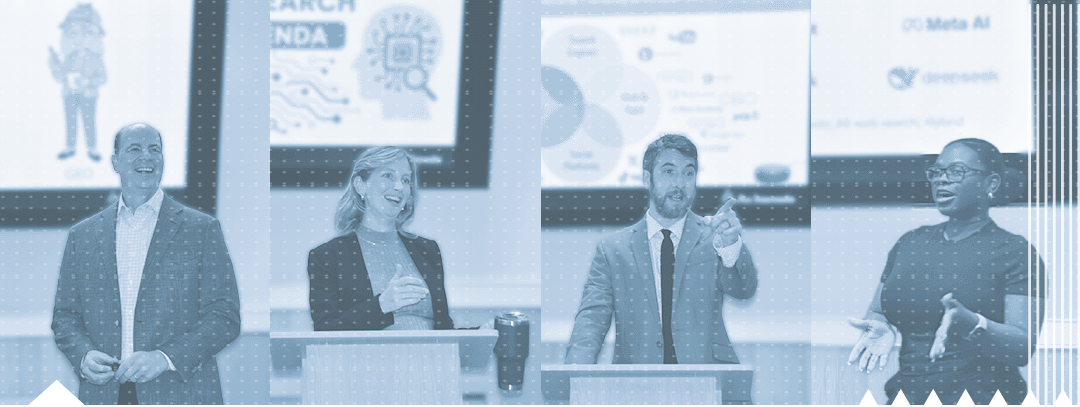
Dave, Katie, Pat, and Chyenne presenting
ShopTalk

We educate our clients. We educate our industry.

ShopTalk is a resource for all things digital marketing, where Arc Intermedia’s subject matter experts publish research, findings, opinions, advice, and recaps of events and conferences.

Articles by

AI isn’t getting cheaper. It’s getting more expensive in ways most companies aren’t paying attention to. As AI shifts from a tool to a core production input, costs no longer stay predictable. They scale with the business.
Automation should not add complexity. It should remove friction. By starting with simple, repeatable processes and designing systems that are observable and resilient, we solve everyday bottlenecks without overengineering. The best automations work quietly in the background, improving flow without demanding attention.
Automation often fails not because of bad technology, but because of broken trust. When workflows feel like black boxes, teams hesitate, double-check results, and build workarounds. Designing automation that is observable, explainable, and predictable turns systems people question into infrastructure they confidently rely on.
AI belongs inside workflow automation as an enhancement, not a replacement. Rules should handle predictable tasks, while AI steps in when interpretation, analysis, or content generation is required. The most effective systems combine structured logic with targeted intelligence, adding AI only when rules alone are not enough.
Automation and AI are not the same thing. While AI gets the attention, most operational efficiency comes from simple, rule based workflows that move information clearly and predictably across systems. You can unlock meaningful gains without adding intelligence at all.
Most manual work feels small in the moment. Copying data, checking statuses, sending follow-ups. But over time, those tasks fragment focus and delay decisions.
Workflow automation is the practice of designing how work moves between systems, people, and decisions. By structuring triggers, logic, actions, and exceptions, organizations reduce repetitive tasks, improve reliability, and create capacity for higher-value work.
ChatGPT’s new in-app integrations promise faster, more seamless workflows—but do they actually deliver? We tested Canva and Adobe Express inside ChatGPT to see if AI could help generate a usable blog featured image. The results were eye-opening.
Big Tech is racing to win AI. Apple isn’t racing at all. And history suggests that might be the smartest move they could make.
I tested the new OpenAi Image 1.5 to see how well it could edit and image while keeping the details consistent along the way.