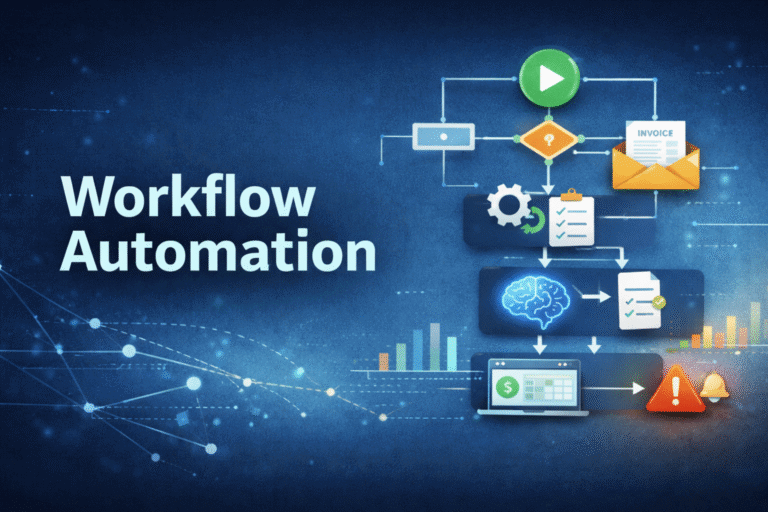
Some of the most valuable process improvements come from eliminating small, repetitive tasks that quietly consume time every day. Others require coordinated systems that manage logic, approvals, and exceptions across departments.
The right level of automation depends on the desired outcome.
Arc Intermedia designs and builds automations that solve real-world problems. Whether that means streamlining a recurring task or architecting a cross-platform multi-step workflow supporting an entire operation.

Automation should not be overengineered or fragmented.
The sophistication of the solution should be determined by the objective. That may mean a lightweight rule-based automation, or a fully architected approach.
Both are valid. Both can deliver significant value. Determining (and building) the proper option is where Arc excels.
Digital marketing is a business investment and must produce real returns. It’s what our clients expect. It’s what we deliver.
Client Revenues

Transactions & Leads
Website Visitors
We design automation in layers, ensuring immediate impact while building a foundation for growth.
Typical processes include:

Opportunity identification
We define the desired outcome and pinpoint where automation will reduce friction.
API and credentials
Gather APIs and credentials to create connections
Right-size the solution
Implement simple, rule-based automation when complexity is not required.
Structure the workflow
Formalize triggers, logic, actions, and exceptions for reliable execution.
Architect for scale
Design coordinated systems when processes span teams and platforms.
Testing & improvements
Test for errors and edge use cases, refine, test again and again
Certifications, continuing education, platform partnerships, and top tech tools aren’t just perks. At Arc Intermedia, they are requirements and our clients are the beneficiaries.
















Call 610.347.5661 or fill out this form to get started.
Automation can range from simple task elimination to enterprise-grade workflow systems. The following questions clarify how Arc Intermedia approaches both ends of that spectrum.
The best candidates are repetitive, rule-based activities such as:
These automations are typically straightforward to implement and deliver immediate efficiency gains.
When a process includes multiple decision points, stakeholders, approvals, or exception paths, it moves beyond task automation.
At that point, structured workflow design ensures the system remains reliable, observable, and scalable.
No.
Most high-impact automation is deterministic and rule-based. AI becomes valuable when interpretation or ambiguity is involved, such as categorizing unstructured input or extracting information from documents.
AI enhances workflows. It does not define them.
We start with the desired outcome.
If a task can be solved with a simple, maintainable rule-based automation, we implement that. If the objective requires coordinated system behavior, we design a more structured workflow architecture.
The simplest path is the best path.
Yes.
Many organizations begin with targeted task automation to generate quick wins. As processes mature, these automations can be integrated into broader workflow systems without starting from scratch.
Our approach is intentionally scalable.
Workflow architecture clarifies and structures processes. However, it cannot compensate for undefined objectives or inconsistent decision-making.
Clarity of outcome, ownership, and logic must precede implementation.
By making logic explicit and designing for exceptions.
Even simple automations include validation and monitoring. More complex workflows include structured exception handling, observability, and governance.
Well-designed automation delivers:
The ultimate goal is not speed alone. It is clarity and confidence in how work moves through your organization.