



AI visibility is how often, and how prominently, your brand (and your content) shows up inside AI-generated answers across platforms like ChatGPT, Google AI Overviews/AI Mode, Perplexity, Copilot, and others. Unlike classic SEO (the “10 blue links”), answer engines frequently summarize, recommend, and cite a short list of sources, which can create a “winner-takes-most” dynamic for awareness and demand.
In 2026, tracking AI visibility matters because your customers are getting recommendations without clicking (or clicking far less). In other words, your brand needs to be in the answer, not just ranking on a page. Further complicating things, share of voice is shifting from SERPs to AI summaries, citations, and “best of” recommendations.
But like with any marketing strategy, you need a reporting tool to measure the effectiveness of your AI optimization efforts. Arc Intermedia has compiled a list of some of the best AI visibility tracking platforms that can help your brand stand out this year.
AI Visibility Tracking Platforms – Ranked
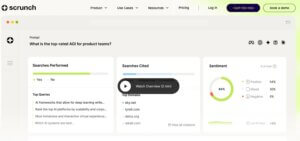
1) Scrunch: Best “AI visibility command center” for teams that want broad coverage + clean monitoring
Why it’s #1:
-
Breadth of AI engine coverage for day-to-day brand monitoring (multiple major answer engines in one dashboard).
-
Prompt + competitor tracking that helps you map “where we show up” vs. “where they show up.”
-
Great for ongoing reporting (especially if you need a consistent visibility narrative week over week).
Where it’s weaker vs. others
-
Several reviews note it can be stronger at monitoring than at prescriptive optimization (i.e., it may show you what’s happening more than exactly what to do next).
Best for: Marketing teams and agencies that want reliable visibility tracking across many AI surfaces with fast on-boarding and stakeholder-friendly reporting.
Cost: $$
Starts around ~$300/mo for entry, ~$500/mo for team plans, scalable but not enterprise-only.
2) Profound: Best enterprise platform when you need depth, governance, and advanced “why did we appear?”
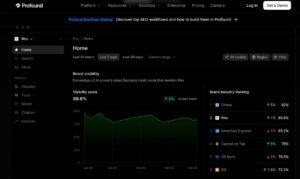
Profound positions itself as an enterprise-grade platform to optimize brand visibility in AI-generated answers and is widely referenced as a leader for larger orgs.
What makes it stand out
-
Enterprise feature set (deeper analytics, workflows, and broader operational readiness).
-
Strong focus on optimization and insights beyond “you were mentioned” (more diagnostic tooling and strategy support, depending on plan).
Tradeoffs
-
Typically heavier (process, implementation, cost) than self-serve tools.
Best for: Enterprise brands (and regulated industries) that need advanced reporting, cross-team workflows, and robust insight depth.
Cost: $$$–$$$$
Enterprise-oriented platform — typically higher-tier pricing, often ~$499+/mo or custom for large organizations.
3) Cognizo: all-in-one AI visibility and Answer Engine Optimization (AEO) platform

Cognizo is designed for brands, agencies, and marketing teams that want real-time insights plus actionable recommendations for boosting their presence in AI-generated responses.
Where it differs from others
-
Broader optimization focus: Cognizo blends visibility tracking + optimization recommendation.
-
Actionable insights: It emphasizes what to do next (content tweaks, prompt focus areas) rather than just showing dashboards.
Tradeoffs
-
Smaller company/Less proven at scale.
Best for: Marketing teams and agencies who want real-time visibility and guidance for optimizing brand presence in AI.
Cost: $$$
Positioned above basic monitoring tools in terms of features and analytics depth but generally below the very highest enterprise tiers.
4) Semrush AI Visibility: Best if you want AI visibility + traditional SEO in one ecosystem
Semrush’s AI visibility offering is designed to help brands track AI mentions and find opportunities across AI platform, especially compelling if you already live in Semrush for SEO.
Why teams pick it
-
Unified “search intelligence” workflow: AI visibility sits alongside your keyword research, competitive SEO, content planning, and reporting.
-
Great for teams that want one toolchain for SEO + AI search/AEO.
Tradeoffs
-
If you only need AI visibility (and nothing else), Semrush can feel like more platform than you need.
Best for: Existing Semrush users or teams that want AI visibility + SEO execution in one stack.
Cost: $$
Part of broader SEO suite; AI visibility tools bundled with broader plans that generally start in mid-range pricing.
5) Similarweb GenAI Intelligence: Best for tying AI visibility to actual traffic impact (GEO + outcomes)
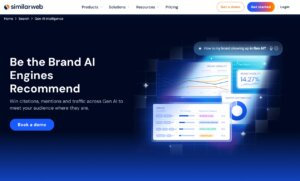
Similarweb’s GenAI Intelligence emphasizes both (1) how you show up in AI answers and (2) what happens after (traffic/behavior).
What makes it different
-
Strong orientation around visibility + traffic attribution, not just mention counts.
-
Helpful for proving ROI and prioritizing what to fix based on business impact.
Tradeoffs
-
Can be overkill if you only need prompt-level monitoring and lightweight reporting.
Best for: Teams that need executive-ready GEO reporting and want to connect AI presence to measurable outcomes.
Cost: $$$$
Enterprise analytics platform with custom pricing typical of market intelligence tools.
6) Ahrefs Brand Radar: Best “zero-setup” brand monitoring across AI + the wider web
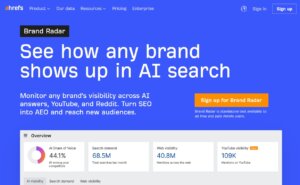
Ahrefs Brand Radar pitches zero setup, large prompt coverage, and monitoring across AI platforms (plus surfaces like Reddit/YouTube).
Why it stands out
-
Fastest path to broad brand monitoring without building a huge prompt list.
-
Strong if you care about reputation/mentions shaping AI answers (the “web signals” behind what models say).
Tradeoffs
-
Depending on your workflow, you may still need a more dedicated AEO/GEO tool for prompt-by-prompt optimization.
Best for: SEO teams that already use Ahrefs and want AI visibility + brand monitoring at scale with minimal setup.
Cost: $$
Available as add-on or part of Ahrefs subscription, roughly mid-range (~$199–$699/mo).
7) ZipTie.dev: Best for practical prompt suggestions + optimization guidance (mid-market sweet spot)
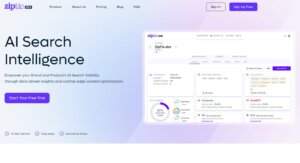
ZipTie.dev focuses on tracking visibility across Google AI Overviews, ChatGPT, and Perplexity, plus practical recommendations to improve performance.
What makes it better than basic trackers
-
Built-in prompt suggestion and content optimization recommendations (more “what to do next” than pure monitoring tools).
-
Good for teams that want actionability without buying a full enterprise suite.
Tradeoffs
-
Narrower platform coverage than “track everything everywhere” tools.
Best for: Growth teams and agencies that want prompt-level tracking + actionable optimization without enterprise complexity.
Cost: $–$$
Positioned as accessible with practical optimization focus, generally affordable but varies by tier.
8) Otterly.AI: Best lightweight AI search monitoring with GEO audits + keyword/prompt research
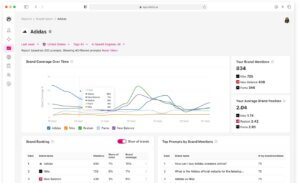
Otterly.AI positions itself as an AI search monitoring toolkit with features like rank tracking and GEO audits.
Strengths
-
Solid for prompt monitoring + reporting and getting started quickly.
-
Helpful “convert keyword to prompt” style research to match how people actually ask questions in answer engines.
Tradeoffs
-
Often paired with other tools if you need deeper attribution or enterprise governance.
Best for: Smaller teams that want an easy on-ramp to AI visibility with auditing-style guidance.
Cost: $
Budget-friendly monitoring options often below mid range (e.g., ~$29+/mo in similar tool reviews).
9) Peec AI: Best clean UX for teams that want “just the signal” (visibility + citations) without bloat
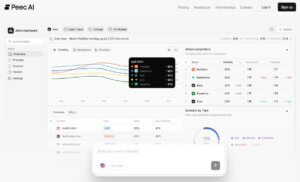
Peec focuses on analyzing brand performance across major answer engines with a simpler, more streamlined interface.
Why teams like it
-
Clear dashboards and a “less noise” approach; set prompts, track visibility, review citations.
Tradeoffs
-
Multiple reviews describe it as better for monitoring than turnkey recommendations/attribution (you may need in-house strategy to translate insights into action).
Best for: Teams that already know what they’re doing and want simple, reliable tracking (not an all-in-one strategy machine).
Cost: $$
Mid-market pricing (commonly in the ~$100–580/mo range).
10) SE Ranking SE Visible: Best budget-friendly “SEO suite + AI visibility add-on”
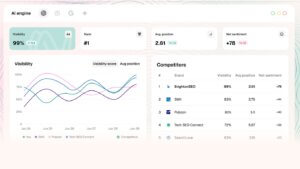
SE Ranking’s SE Visible is positioned as an AI visibility layer for monitoring brand presence, sentiment, and competitor performance.
Strengths
-
Attractive for teams that want SEO tooling + AI visibility at a lower price point than many enterprise options.
Tradeoffs
-
Some reviews note the AI functionality can feel split across multiple areas of the product, which may add learning curve.
Best for: Budget-conscious teams that want a broader SEO platform plus AI visibility in the same subscription family.
Cost: $$
SEO suite with AI visibility add-on, generally a mid-range option. (Exact pricing varies with SEO plan).
11) Writesonic: Best “AI content + optimization suite” for brands that want creation and visibility in one platform

Writesonic is an AI-first marketing platform focused on creating and optimizing content for search and generative AI visibility.
Core advantages
- Strong AI content generation capabilities combined with optimization features designed for search and generative engines.
- Includes GEO-focused tools that help structure content for better AI interpretation and citation.
Limitations to consider
- May not provide the same depth of cross-engine monitoring and competitive visibility mapping as platforms focused exclusively on tracking.
Best for: Marketing teams, content strategists, and in-house SEO teams that want to create, optimize, and experiment with GEO-friendly content inside a single workflow.
Cost: $$
Tiered pricing with entry plans under $100/month, scaling based on usage and feature access.
What makes one AI visibility platform “better” than another?
When you compare platforms, focus on these differentiators (they’re the real decision drivers):
-
Engine coverage
Do you need ChatGPT + AIO + Perplexity only, or a broader set (Copilot, Claude, Gemini, etc.)? -
Prompt strategy & scale
“Bring your own prompts” (more control, more work) vs. “zero-setup / huge prompt library” (faster, less tailored).
-
Actionability
Does it only report mentions/citations, or does it provide clear next steps (content updates, gap analysis, recommendations)? -
Attribution & ROI
Can it connect visibility shifts to traffic and outcomes, not just presence? (This is where Similarweb often shines.) -
Enterprise readiness
Security, permissions, auditing, integrations, and governance matter a lot at scale (often a Profound/Conductor-style strength).
Want to learn more about AI Visibility and Arc Intermedia’s Organic Visibility Services?
See case studies, more articles, and get a free quote for your brand.


