


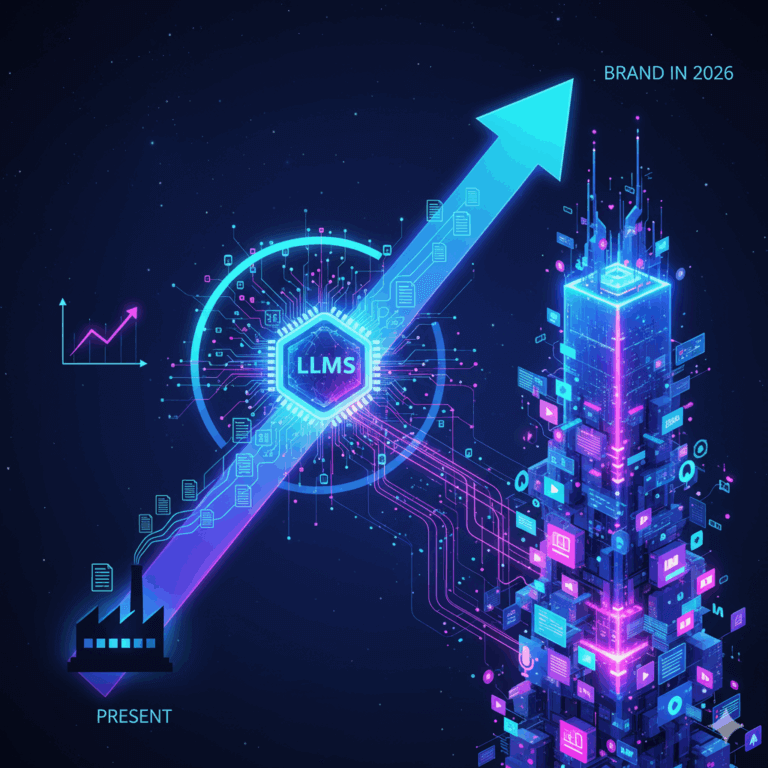

The year 2026 is poised to be a watershed moment for digital marketing. Not because we’ll be writing less, but because we’ll need to write more and better content than ever before. The core driver of this shift is the ubiquity of Large Language Models (LLMs) and the rise of Generative Engine Optimization (GEO) and Answer Engine Optimization (AEO). For brands of all sizes, scaling content isn’t a luxury—it’s a critical strategy for maintaining visibility and establishing authority in an AI-driven digital landscape.
The LLM Effect: Shifting Search and Consumer Behavior
LLMs, the technology behind tools like Google Gemini and ChatGPT, are fundamentally reshaping how consumers find information. No longer is discovery limited to traditional blue links. Instead, searches are increasingly occurring through conversational interfaces, AI Overviews, and direct, AI-summarized answers.
This shift has three major implications for content volume:
- The New Visibility Challenge (GEO/AEO): To be referenced by an LLM in its summarized answer—a critical form of new visibility—your content must be the most trustworthy, original, and semantically clear source. This requires creating more content that systematically answers a broader range of user questions and covers an entire topic cluster in depth. If a consumer’s query is answered by an AI summary without them ever clicking a link (“zero-click content”), your brand’s authority rests on being the cited source.
- The Personalization Arms Race: LLMs are the engine for hyper-personalization at scale, creating unique content experiences (emails, landing pages, product recommendations) for millions of individual users. To feed this engine, brands need an exponentially larger library of modular, high-quality content assets that can be dynamically stitched together to match individual user intent and behavior.
- Counteracting ‘AI Slop’: The efficiency of LLMs means the internet will be flooded with generic, low-effort “AI-slop.” To cut through this noise and earn credibility, human-driven expertise, first-hand data, and unique insights—what some call “information gain”—are paramount. LLMs handle the volume of the routine, freeing human experts to create the volume of the truly differentiated content.
How Does More Content Benefit Your Digital Marketing?
The investment in content scale in 2026 is an investment that reverberates across your entire digital marketing ecosystem.
First, a higher volume of strategically designed content leads to increased AI visibility. This means crafting content optimized for conversational queries, structured with clear headings and concise answers (under 50 words) that LLMs can easily parse and cite.
Second, using LLMs for high-volume, repetitive tasks (like drafting and summarizing) allows for enhanced efficiency. This process essentially frees up your human marketers to focus their time on strategy, creative development, and high-value expert content. Furthermore, by creating more content that features subject-matter experts, authentic reviews, cited sources, and transparent methodology, you build the trust signals that both LLMs and consumers now prioritize, resulting in stronger Audience trust. This is important: As AI slop increases, human content from recognized experts as well as real users will become even more valuable
Finally, a larger content inventory provides the modular assets (e.g., videos, short-form posts, long-form guides) that can be easily repurposed and tailored for every platform, thereby driving better multi-channel performance across your entire distribution network.
Winning Strategies for Brands Big and Small
The shift favors the agile and the expert, making this a winnable game for all:
- For Large Brands: Your strategy must be scaling with governance. Leverage LLMs to automate the creation of high-volume, repetitive content (product descriptions, localized updates) to free up subject-matter experts. Focus human teams on creating high-authority, insight-driven thought leadership that establishes your brand as the definitive source that LLMs must cite. Invest in tools for LLM audits to track and optimize your brand’s presence in AI-generated answers.
- For Small and Mid-Sized Businesses: Your strategy is expertise over volume. While you can’t outspend large brands, you can out-specialize them. Use LLMs for efficiency (outlines, first drafts) but ensure the final content is imbued with first-hand experience, local insights, or niche expertise that no LLM can replicate. Focus your increased output on content formats that LLMs favor for citations—FAQs, comparison tables, original data, and definitive “how-to” guides. A focus on community-led content—creating valuable assets in niche forums and social platforms—is a powerful distribution strategy.
In 2026, the competitive edge belongs to the marketers who master the blend of AI efficiency and human originality. The need to create a vast, high-quality, structured, and trustworthy body of content is the new imperative for digital success.
Want to learn more about content marketing and content placement? Talk to Arc. We provide these services to multiple clients.
Looking for ideas about how to get ahead in the AI race? Read our article How to Measure and Improve Your Business’s Performance in AEO and AI Search Engines. Also learn more about Creating Content in 2026 with our Strategic Framework for Content Resilience in the Age of AI.


